Tag: innovation

  • Amazon Prime VP Jamil Ghani: “Prime is Not A Loyalty Program”

    Jamil Ghani is the Worldwide Vice President of Amazon Prime, leading product, technology, marketing, decision science, operations, and finance teams that build and operate the membership program for over 200 million members across 26 countries.  

    He sits down with Natalie at the end of the Amazon Prime analyst event in Seattle to discuss the latest innovations and strategic direction of Prime. They explore:

    • The key pillars of Prime: convenience, savings, entertainment.
    • With new Prime markets like Colombia and Ireland, Jamil discusses why Amazon aims to launch Prime internationally “as quickly as possibly but as slow as necessary”.
    • What Prime is NOT: Jamil says it’s not a loyalty program, not a breakage model, and not a loss leader.
    • Is Prime nearing saturation? Learn where Jamil sees opportunities for further customer acquisition in the US.

    The first half of the episode focuses on Natalie’s takeaways from the Amazon Prime analyst event. If you’d like to skip straight to the interview with Jamil, this starts at 10 minutes.

    * Natalie will be releasing a Forbes article with more insights from the event later this week. *

    Jamil’s bio:

    Over his 7-year tenure, Jamil has accelerated Prime’s growth, tripling the membership and doubling per member spend. He has also broadened Prime’s offerings, expanding to 13 new countries and launching new benefits in multiple high-value categories, including health care, grocery, and restaurant food delivery. He works across Amazon’s consumer businesses to innovate on behalf of customers, build the Amazon and Prime businesses, and make customers’ life better every day. Before coming to Amazon in 2017, Jamil served as Senior Vice President, Enterprise Strategy, Digital & Innovation, for Target Corporation. Before that, he spent five years at The Walt Disney Company focused on identifying, developing, and launching travel and leisure growth initiatives. This included the MyMagic+ experience system, Shanghai Disneyland Park, and Aulani destination resort. Jamil holds a BA magna cum laude from Harvard College in economics and computer science and an MBA from the Harvard Business School, where he was selected as a Baker Scholar. Jamil lives with his wife and two (soon to be three) daughters in Bellevue, WA.

    Find out more about the Retail Disrupted Podcast by visiting retaildisrupted.com
  • Perpetual Disruption Requires Perpetual Innovation

    If you’re not innovating, you’re standing still and that is the most dangerous place to be in retail. Perpetual disruption requires perpetual innovation.

    The most successful retailers today are those that reject the status quo. They foster a culture of innovation and fast failure. Everything they do begins and ends with the customer. They understand that they have to keep moving, constantly evolving their proposition, and experimenting with new technologies in order to stay relevant in this digital era.

    That’s easier said than done in the current climate. Ongoing cost pressures and soft consumer demand mean that retailers must deal with more pressing, short-term challenges. In times like these, innovation can often get put to the back burner. 

    However, now more than ever, it’s essential that retailers embrace technology as a means of driving efficiencies as well as enhancing the customer experience. I keep coming back to the phrase ‘tech-enabled human touch’. In my view, this is what’s going to separate the retail winners from the losers going forward. Store associates are a retailer’s most valuable asset. Equipping them with the right digital tools means that they can quickly address any customer pain points and cut friction from the in-store experience (ie. help a shopper to find an item on the shelf, reorder an item that is out of stock, or check a customer out on the spot with a mobile POS device).

    And, with greater transparency around a customer’s shopping habits across both physical and digital channels, it also enables staff to offer a more deeply customised experience. This is only going to improve as retailers look to AI to power those more personalised recommendations. 

    And things are moving quickly. At a client event in Cannes earlier this month, Manhattan Associates CEO Eddie Capel reminded us that it took Netflix ten years to get to 100 million users. It took TikTok 9 months. And for ChatGPT – just two months.

    Generative AI will transform retail. This is an industry that is accustomed to a certain level of disruption, but today technology is progressing at a mind-boggling pace. Many believe we are on the cusp of another ‘smartphone moment’ where an immersive digital world is about to transform our lives.

    But will we all be donning VR headsets and living in the metaverse? I don’t think so. When exploring these new disruptive technologies, it can be difficult to separate the hype from reality. When it comes to the metaverse, there is much scepticism and general befuddlement. What is it? How do you enter it? Is anyone even there?

    It’s difficult to define right now because it’s still being built. And if you ask those who are building it what the metaverse is, you’ll get a ton of different answers. This means that to the layperson consumer it can be a difficult, almost impossible, concept to grasp.

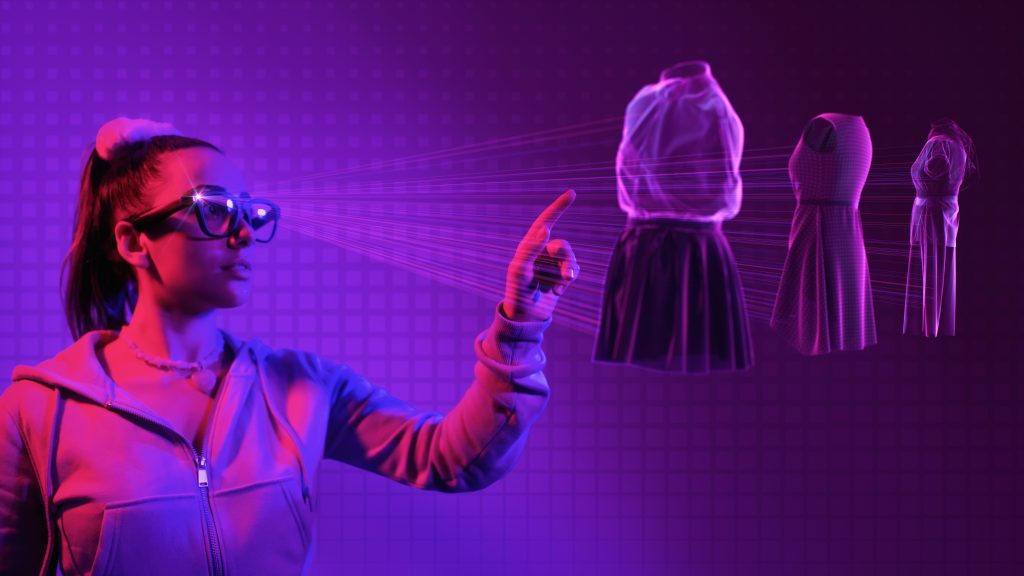
    However, just as retailers have digitised their physical stores, they must now turn their focus to making our digital experiences more immersive. Today, online shopping is still fairly one-dimensional. It’s transactional. But it’s moving in the right direction – it’s becoming more engaging and discovery-led. For example, retailers are increasingly using video and 3D images (often AI-generated) to create more contextual experiences for online shoppers. Augmented reality (AR) is bridging the gap between physical and digital retail, especially in beauty, luxury, footwear and home. Virtual shopping consultations are connecting online shoppers with in-store staff, again harnessing expertise to elevate the customer experience. Liveshopping, too, is picking up momentum and social commerce is taking the discoverable and making it transactional. People used to find products; today products find people.

    If we look even further into the future, we won’t know where the physical world ends and the digital one begins. Our AI-powered shopping assistants will make our lives easier and more connected than ever before (Bill Gates even thinks they will kill off Amazon and Google search). Virtual showrooms will never replace the physical store but they will become the next best thing. And spatial commerce has the potential to completely redefine the online shopping experience.

    The future is wildly exciting for retail. Don’t get left behind.


    This commentary originally featured in the KPMG/Retail Next Retail Think Tank Q3 whitepaper. Read in full.